DESIGN POSTCARD: Sir John Soane’s Museum
As it launches a fabulous collection in collaboration with Liberty, come and look around this wonderful house
Apparently the architect and Royal Academician Sir John Soane was so despairing of his son that instead of leaving him his three adjoining townhouses in Lincoln’s Inn Fields he lobbied Parliament to change in the inheritance laws so he could cut him out of his will and bequeath both his home - and collection - to the nation. And what a fabulous thing for us that turned out to be.
The son of a bricklayer, who showed an aptitude for drawing, Sir John died in 1837 at the age of 83 and his home is described in the Oxford Dictionary of Architecture as “one of the most complex, intricate, and ingenious series of interiors ever conceived”.
Designers including Rose Uniacke, Ben Pentreath and Martin Brudnizki have all cited him as an influence on their work while Beata Heuman says the museum is one of her favourite places in London.
Sir John’s passion for collecting - in particular classical art and architecture - was inspired from a Grand Tour of Europe he undertook after winning a gold medal for his studies and receiving a bursary, partly funded by King George III, that allowed him to travel and study abroad.
Seven years after Soane’s demise came the birth of Arthur Lasenby Liberty - who would go on to found the iconic (and I use that word advisedly) department store on London’s Regent Street.
Although the two men never met, both are celebrated as creative, forward-thinking visionaries who completely reshaped how the British public experienced art, architecture, and interior style. And last week the two men were finally brought together at the unveiling of a collaboration of textiles designed as a joint collection between the two historic establishments.
The fabric was created last year, and sold at Liberty as part of the anniversary I Am. We Are. Liberty. collection, in celebration of 150 years of the store.
This year the design, no longer on sale at Liberty itself, has been turned into a handsome collection of scarves, ties and purses exclusive to Soane’s Museum. But in a clever marketing move, you can also buy the fabric in 2m lengths, along with a selection of fabric-covered buttons, should you feel creatively inspired.
Will Gompertz, the director of Soane’s Museum (sporting a tie from the collection - I forgot to take a picture) said Grand Tour Fragments – as the name suggests – was inspired by Sir John’s travels across Europe and combines an archival 1920s Liberty print with neo-classical ornamental medallions from drawings in Soane’s Library. Soane Museum Paisley reimagines a classic Liberty design into a flowing contemporary pattern.
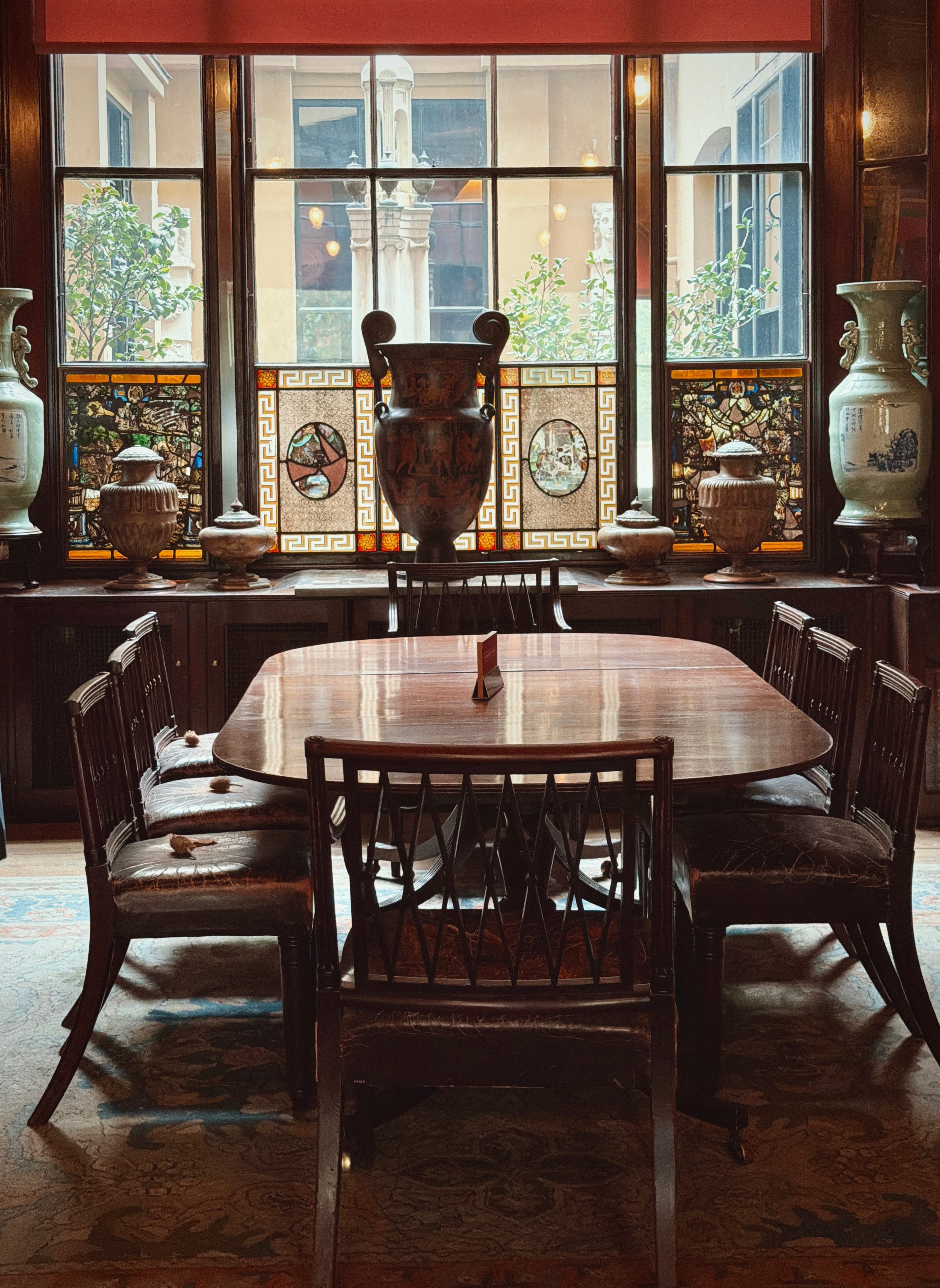
After the launch we were allowed to wander through the building, although the private apartments were not open. To see those you must queue at 2pm on Wednesdays and at weekends and join the queue. Only the first eight are admitted.
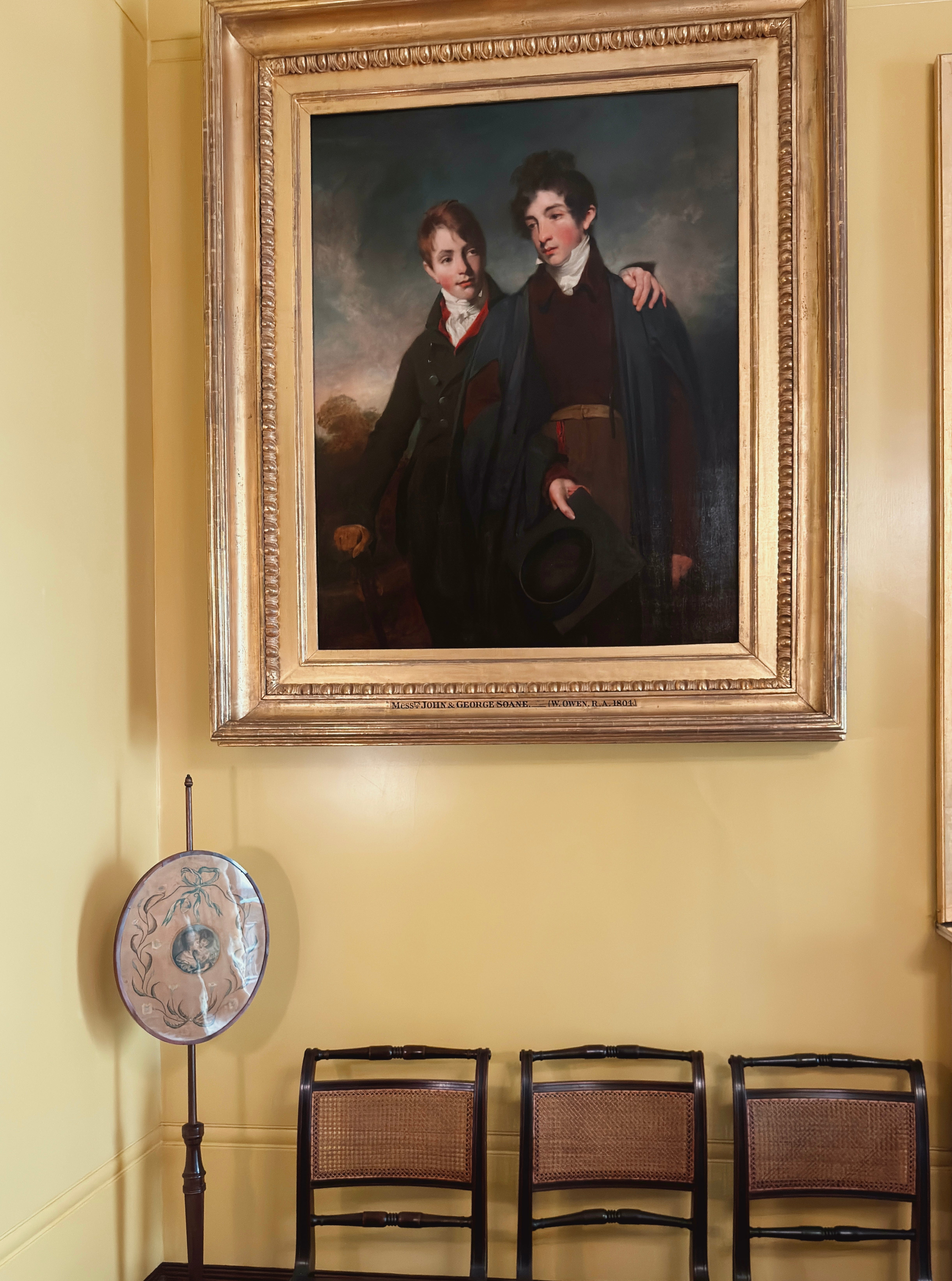
But I’m guessing you want to know more about Sir John’s wayward sons, right? So neither John nor George wanted to follow in their father’s footsteps. John, who suffered from consumptive illnesses, died young, having abandoned the architectural studio his father placed him in after only a few months.
Below is a portrait of them both I grabbed without realising who it was, hence the rather poor composition of the photo. John, the elder, is on the right in his university gown.
George wanted to be a writer, and spent so lavishly he ended up in debtors’ prison. He also served time for fraud. Upon his release he wrote two vicious, and anonymous, articles about his father’s reputation as an architect, the stress of which his father blamed for his (George’s) mother’s death some six months later.
An article in the London art file says: “When two articles were published that same year in The Champion newspaper, damning the state of English architecture and more specifically the architecture of a certain Sir John Soane, it took Soane little time to ascertain the words had been written by his own son George. When Eliza Soane read these articles, she reportedly exclaimed to her husband: ‘This is George’s doing… I will never hold my head up again. He has given me my death blow.’”
She died two months later.
“Soane was devastated and would forevermore blame his son for causing ‘the death of all that was dear to him.’ He had the offending newspaper cuttings mounted on a wooden board, with a title that reads, Death Blows given by George Soane and nailed it up in full view in the dining room. Father and son would never speak again.”
The family rupture led to Sir John negotiating a private Act of Parliament to place his house and collection in the care of a board of trustees, who would allow the public access to his home for free forever.
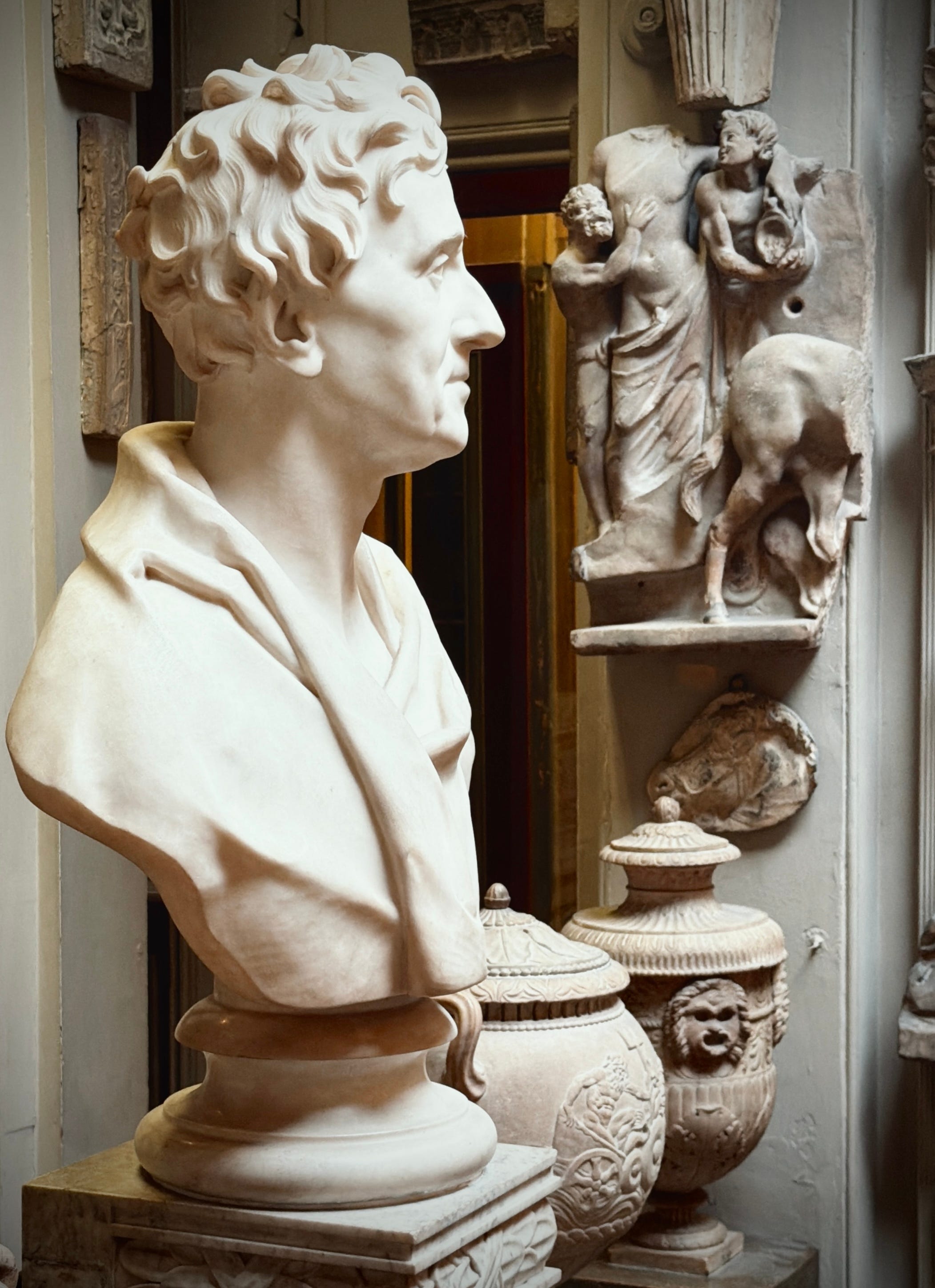
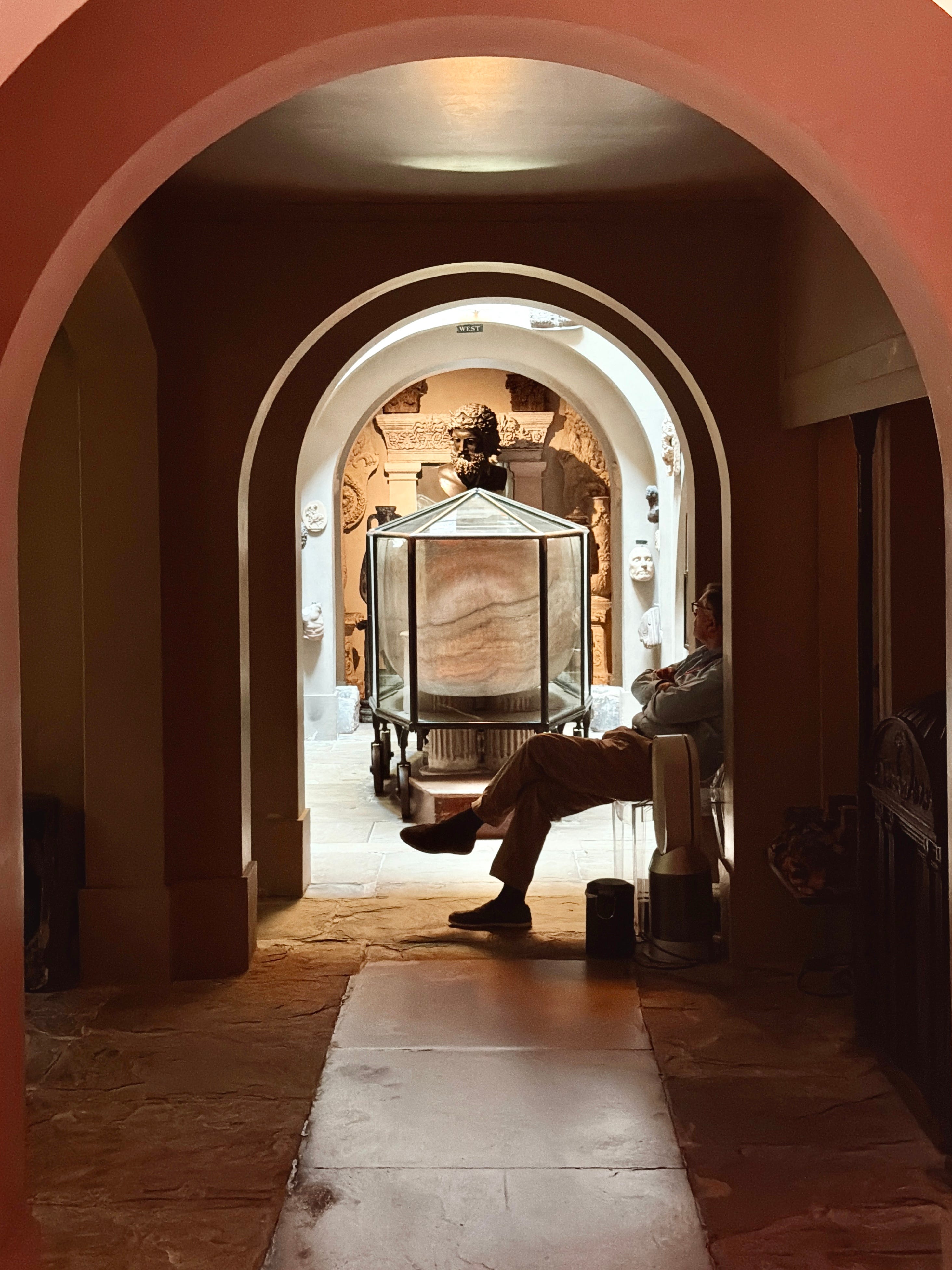
The Museum, which spreads over three houses (Sir John bought and rebuilt no 12 followed by no’s 13 and 14), is home to some 30, 000 architectural drawings, 6,000 books and 7,000 Greek and Roman antiquities, as well as a translucent alabaster Egyptian sarcophagus that was the tomb of Pharoah Seti. He acquired it for £2,000 in 1824, after the British Museum turned it down, and he had to partially demolish a back wall of his house to install it in the basement.
There is also a fine collection of paintings, including several by Canaletto and eight Hogarth canvases of The Rake’s Progress, telling the story of a debauched young man, living a life of parties and pleasure in 18th-Century London.
Indeed, given Soane’s disdain for his younger son’s lifestyle, it seems strange to recount that he once gave a party that lasted for three days.
His kitchen contained the first kitchen range, installed in 1812 (just a year after the designer Thomas Deakin patented his design). And the room could inspire many of us today. I particularly like the pantry cupboard at the end of the dresser, with a window so you can see the contents.
Next year the Museum will release new colourways of the fabric, but in the meantime you can shop online here. I bought the skinny scarf for £35 and I love it.
Thank you so much for reading. If you enjoyed this post please do drop a like and restack - it makes a huge difference. And if you would like more in-depth articles on interior design along with interviews, shopping and access to my monthly drop-in design clinic where you can bring your decorating dilemmas to a live video chat, then do sign up to be a paid member of the community.
The next clinic will be at 2pm UK time on Monday 5 October. Paid subs can access the link below and leave their questions in the comments.