Humanmaxxing: Rachel Karten (6/10)
doing things the hard way
Welcome to Humanmaxxing, an interview series on thriving in the age of machines. New episodes drop weekly. You can watch full conversation with Rachel on YouTube and listen on Spotify or Apple Podcasts. Committed wordcels can find the edited transcript below.
Plus, we partnered with Granola (the actually discrete meeting notetaker we LOVE and use every day) to sponsor this series and record each conversation. You can chat directly with Rachel’s conversation here, pull out takeaways, and follow whatever thread interests you. If you want to try Granola unlimited, use code SUBLIME to get 3 months free here.
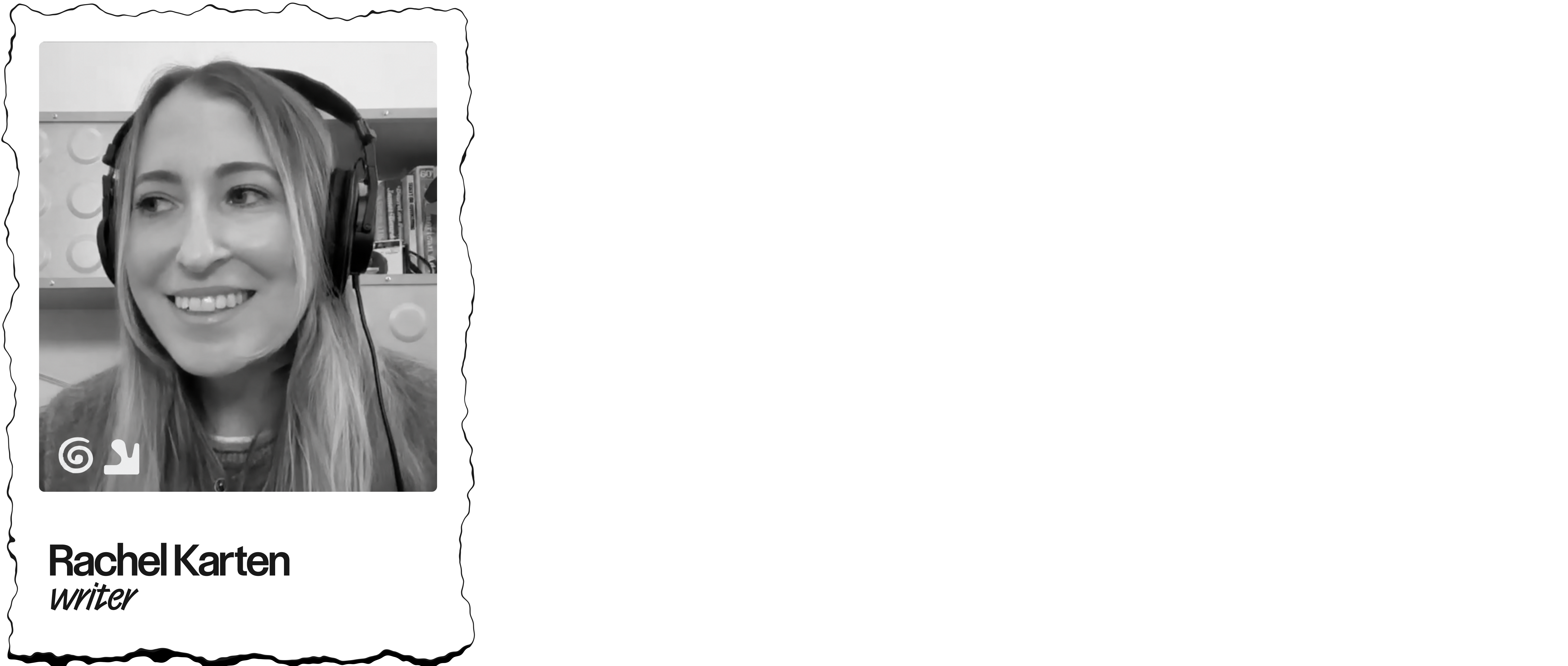
Today’s guest is Rachel Karten, the social media strategist, writer, and creator of the must-read (and top five newsletter by startup spend) Link in Bio. I love Rachel’s takes. You get the sense that the insights she shares could only have come from her putting in the time, knowing who to know, having lots of conversations, and going DEEP.
In this conversation, Rachel covers why the best social media strategy might require posting less, why audiences can smell shortcuts, what brands still misunderstand about the internet, and lots more…
Speaking of posting less, next Wednesday at 12pm EST we are hosting SAY LESS, a Sublime Session with Caitlin Mayance (who previously spent years working on content strategy at Dazed, ASOS, SSENSE, and more) on how to create with more intention. You’ll leave this session with a clearer definition of what “saying less” means for your brand. RSVP here and use code SILENCE for complimentary access.
Enjoy ;)
Sari
P.S. Code for Creatives, Cohort 4 is nearly sold out, and this is your last chance to apply. Your future peers include a brand studio owner, a SF yoga teacher, an interior designer, an NYU humanities professor, a growth marketing consultant, a senior product manager at a tech startup, a CPG founder, and more. Let’s get cozy!!
ALEX DOBRENKO: What has it been like with AI over the last couple of years from your vantage point?
RACHEL KARTEN: It’s tough to say. At the same time as this is happening, algorithms are also getting a lot more personal. It’s easy for me to say that I don’t get a lot of AI in my feed, so it must not be a thing, right? But then some of these platforms will release the top overall videos that month, and they’re all AI videos. Which means my algorithm doesn’t look like that, but somebody else’s does. I go down these rabbit holes of finding accounts. One I see often is DIY accounts where they do renovations like putting a plane underground to use as a den. People will be like, this is so cool, and it’s like, no, this is completely AI-generated.
But the views indicate to me that it’s a problem, because these videos are getting 25 million views. Somebody is watching these and enjoying them. There was a study that came out about YouTube Shorts. YouTube will put a lot of AI-generated content in the intro flow for someone. They want people hooked on that content, but they’re not going to show it to me, because it knows what I like on Shorts. There’s an addictiveness to the AI slop videos. Maybe they put more of them at the top of the funnel when you first join.
To me, the most dangerous part is the skepticism. Adam Mosseri, head of Instagram, has addressed this too. It’s this feeling that you can’t trust what you see anymore, and even with real videos, people are like: Is this AI? Is this real? Everything is coded as AI-feeling. Yesterday, the It’s Always Sunny in Philadelphia promo poster came out and it looked like AI, so they had to post something showing all the Photoshop layers to provide evidence, as if they were in court. I worry about the sort of art that looks like AI like CGI, because people are going to react negatively no matter what. There’s a lot of skepticism out there, especially with brands — it’s not a fun place to start your scroll from.
It’s this feeling that you can’t trust what you see anymore, and even with real videos, people are like: Is this AI? Is this real? Everything is coded as AI-feeling… There’s a lot of skepticism out there, especially with brands — it’s not a fun place to start your scroll from.
AD: How are people combating that from the creator and the brand side? What are they doing knowing that people expect bullshit?
RK: I wrote this idea over a year ago that brands will need to prove their reality. If you’re making something, have a post ready to go where you’re saying, this is how we made it. People are going to expect it from now on, or they’re going to assume it’s AI.
And then, if everyone can just generate anything, what’s our edge? We’re actually seeing brands go through wild degrees of effort to make things because it’s impressing people right now. Like, oh my God, they actually did the work. It’s a currency. People have gotten savvy about how marketing works.
The process is not just content for marketers anymore, it’s for anyone who’s interested in the internet. No one wants to see brands taking shortcuts in this moment.
No one wants to see brands taking shortcuts in this moment.
AD: One of the things I learned in improv is this idea of treating your audience like geniuses. They are, and they’ll respect you for noticing.
RK: Totally. I wrote about this a few months ago, called Mr. Rogers Marketing. A big part of Mr. Rogers’s magic was that he spoke to kids as if they were adults, and he explained really hard topics so they could understand them. As brands, we need to stop treating our audience like they’re stupid.
But on your improv point, I would also say that a lot of social managers, professionals I’ve interviewed, come from a comedy background. And that’s no surprise. Some of those improv skills, stand-up skills, translate so obviously.
AD: Yeah. Have you done any improv, stand-up, anything like that?
RK: No, and that’s how I know I should, because I’m so scared to do that.
AD: You know, reading you and talking to you, I get this sense that you just really love social media. You love the content on there. Is that true?
RK: I love working in social media, but I’m not so in love with it that I won’t criticize it.
AD: What’s also interesting is that people talk about AI the way they talk about social media. They think both are really negative. How are they different to you?
RK: Well, the original contract of social media was to connect people. It was to put out creative work and reach new people, and it was rooted in human connection. We’ve strayed from that to some degree. I’m seeing reports that 50% of LinkedIn posts are written by AI and that all the comments are bots. I think that’s a horrible thing. But that initial contract is what made me excited about social media, and still gets me excited about it.
Also, a lot of the work I highlight in my newsletter strays somewhat from the traditional social media hustle culture of post, post, post, pull every lever you can. My thing is more, post once a year, but make it the best thing you’ve ever made, and then use social media to distribute it.
It’s coming from a place of creativity, and AI hasn’t proven to be extremely useful from a creative standpoint.
AD: And you don’t use it at all.
RK: I don’t use it at all.
AD: That’s crazy.
RK: Well, my job is to write and to find content that a robot never could, or post ideas that come from weird places. That’s my edge. And I think it can be a slippery slope. I’ve watched people use AI for one thing, and then, suddenly, it’s doing all of their thinking. I don’t want to touch that.
The work I highlight in my newsletter strays somewhat from the traditional social media hustle culture of post, post, post, pull every lever you can. My thing is more, post once a year, but make it the best thing you’ve ever made, and then use social media to distribute it.
AD: What is your process of thinking, and letting ideas gestate and develop?
RK: When I have an idea for one of the sends, I’ll create a note for it and just write like crazy. A lot of it is just compiling, and it often involves scrolling and finding things that can be applied to a broader industry. I’m always consuming and thinking about how brands can show up on the internet in a better way.
I also consult with brands often and get to work on campaigns and posts and work with their social teams. I’m not just reporting on it, I am in it. So the newsletter is a doer’s perspective with a reporter’s edge. For example, a few years ago, I noticed that the clothing brand Reformation was posting videos I had seen before from creators. And I was like — huh, this is so weird. They were essentially having creators recreate their viral videos, but this time in Reformation’s clothes. And then Business Insider picked that story up. It’s these little things where I’m so in it that I can see a pattern before a reporter who’s not on the tactical side of things can.
When I started the newsletter, people were like, you should expand into paid social, or even into broader marketing, interviewing more CMOs. Expand from just social media. But that’s the thing — I want to be the person who goes the deepest on social media, and I’ll provide better insights than any of the more marketing-focused newsletters you might receive.
My job is to write and to find content that a robot never could, or post ideas that come from weird places. That’s my edge. And I think it can be a slippery slope. I’ve watched people use AI for one thing, and then, suddenly, it’s doing all of their thinking. I don’t want to touch that.
AD: It sounds like you were confident from the jump.
RK: It’s the only thing I know. There are a lot of people who pretend to be experts on things they don’t know. I said, this is my bread and butter — I’m not going to write about paid social, because I don’t do paid social. I’m curious about it, and sometimes I’ll write about it when it connects to organic social, but I’m not going to pretend I know something I don’t.
AD: Did you think there’d be enough of an audience to make it your living?
RK: I figured I’d one day reach all the social managers, and I don’t know how many social managers exist. I tried to find out; I don’t know. But social media and the way brands show up online have also become so important during the time I’ve been writing the newsletter. It’s benefited me. People in the C-suite are interested in social media like they’ve never been before. They’re interested in the creator economy, whatever it might be. So yes, my primary audience is people who work on social media teams, but there are a lot more people curious about how brand and social works than you could imagine.
AD: And everyone is kind of running their own little brand now.
RK: Yep, there’s that side of it too. There are also creatives. An odd example is that I get a lot of authors who subscribe to Link in Bio, because their publishing team is like, you need to be on social media. It’s a sign of the times, where people need to have a social media presence to open doors. I have issues with it, but it fuels the newsletter.
AD: What are the meta trends that you think are coming next?
RK: I think there’s a narrative right now that social media is a volume game, a dumping ground for content. The clipping conversations have been happening for a while — this idea that you create one long-form piece of content and turn it into a hundred posts that you just shove out there. In the old world of social, you’d only post once a day so you don’t bother your followers too much. Now it’s like, our followers don’t even see our posts anymore, so let’s just send whatever out there and let the algorithm choose what will work. That can be a dangerous game to play. There are a lot of scammy tactics you can take when you play this game, and I’ve been seeing some weird types of accounts show up, like fake influencers who work at a brand. It’s the Wild West out there right now, and you don’t have an FTC that knows what to do with it.
One of those DIY accounts I was telling you about was posting 50 times a day. A human can never compete with that.
AD: So where does that leave us?
RK: I think the optimist’s take is that really good video and really good content will stand out and be more valuable than ever. I think people will start to log off more, slowly. I’m okay with that. But in my industry, I need to be aware of how people are showing up to their scroll. There’s an account right now going viral in which this older man is breaking the fourth wall and saying, you’ve reached the end of your scroll, I know it’s tough out there. He’s really meeting you in that moment, knowing that you’re glazed over and unhappy scrolling. And he breaks it by being like, get outside, go sit by the creek. It’s doing huge numbers. Do I think everyone will abandon social media? No. But as you start to enjoy scrolling less, you’re going to fill it with other things.
The optimist’s take is that really good video and really good content will stand out and be more valuable than ever.
I think if you’re just using engagement metrics, view metrics, it’s a losing cause — you have to start looking at other metrics to judge whether people are enjoying being on your platform. People will watch a lot of things. Rage content, for example. Your numbers might look good, but they don’t represent sentiment.
I wrote this article that went quite viral — does your boss have AI brain? That sums up my feelings around AI. Marketers’ bosses, who probably never really understood how social media worked, are over-relying on AI for their instincts. It’s like sending a meme to your boss, who runs it through Claude to ask if it’s funny. It’s tough and not good for morale.
AD: I loved that piece. It’s so good. What do you even do in that situation?
RK: The defeatist take is that a lot of people have told me that they’ll share their own thoughts and say it was Claude. There was even somebody who told me they’d mock up their response in Copilot’s UI.
But so much of good social media is gut instinct. Reading a room, knowing what and what not to comment on. If you have a boss who doesn’t understand social media and its value, it’s very hard to come back from that. I know people who’ve left their jobs, even in this climate, just to find work somewhere where they can have buy-in and trust. Other people try to find ways to do good in whatever way they can through the accounts they work on. That means not doing every trend. If people are showing up skeptical, how can your brand make people feel good? Can you show up in ways that make people happy?
If people are showing up skeptical, how can your brand make people feel good?
When I wrote the AI-brain article, my conclusion wasn’t “stop using AI.” I’m aware that’s not happening. But have guardrails, educate your employees on how best to use it. For a lot of employees, they’re mandated to use this thing. But how come Asana or Notion came with a five-week training, but with AI, you’re just supposed to figure it out yourself? This is a huge shift in how people are working.
AD: It’s especially odd because in this case people are thinking that it’s going to replace them. You’d think the training would be even more important, psychologically, to tell them, hey, look, you’re alright.
RK: Exactly. I feel like most of your exposure to AI as an employee is around layoffs. And then you have these companies also saying, humans still matter. And it’s like, well, duh. I was at Cannes, and I overheard a breakfast that was happening. Everyone was sharing what they love about being human. It’s like, come on, what are we doing here?
Probably sponsored by an AI company, mind you.
AD: It’s like that song, “For He’s a Jolly Good Fellow.” If you have to sing it that often, he doesn’t seem like that good of a fellow.
RK: We get it!
AD: What recommendations would you have for creatives and other leaders to use these tools in a way that isn’t awful, within social media but also in general?
RK: The use case for AI that I have been interested in is using it to mock up a big idea, and then selling that idea to an executive who can’t visualize the vision. I’ve heard people unlock bigger budgets because of using AI. Using it more on that side of things rather than the output is interesting. I don’t think people want to see big brands, who they see as having big budgets, cut corners and use AI as the output.
And I think boss AI brain comes from a place of insecurity with not understanding social. That’s a huge problem in social media — I’ve never really worked for a boss who had also worked in social media. It’s a newer profession. So there aren’t a lot of executives who’ve touched social media. Instead of learning about it and going to lunch with their head of social, they’ll put Claude in as their de facto approver. To them, I’d say: go to lunch with your social director, find out what they love doing. I can promise you it’s not going to be coming up with ten captions in Claude. Understand the fun part and don’t kill it.
AD: Don’t kill the fun part is a good, simple motto. I love that.

Thanks again to Granola for making this series possible. You can chat with the full conversation here and use code SUBLIME to get 3 months free here.