This week, we’re selling coffee in the Scottish isles, pulling back the curtain on Fashion Week, and turning our attention toward a new kind of online safety.
PARENTING
How Spotify DMs kept a parent connected to her stepdaughter
After an abrupt divorce, Chloé Caldwell was separated from a child she helped raise. Sharing music was their lifeline.
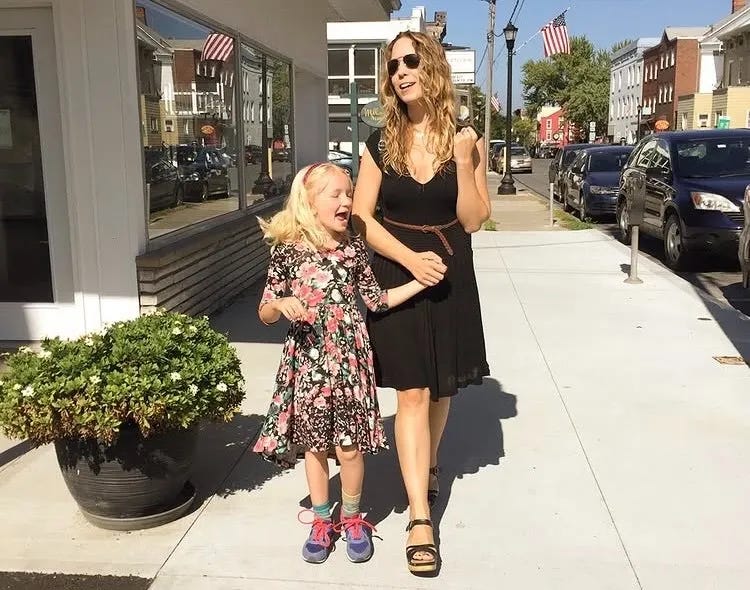
For her 13th birthday in June 2023, I had made my stepdaughter a playlist entitled “Music For When You Turn Thirteen.” When I’d begun making the playlist that April, I hadn’t yet known I’d be getting divorced from her dad that summer, and that it would alter our dynamic in ways I wouldn’t be able to fathom. I’d added songs to it like “Thirteen” by Elliott Smith and “Teenager” by Camera Obscura. We all need someone in our life to expose us to Fiona Apple, Kate Nash, and Neko Case, and I was that person for her.
In the aftermath of my overnight divorce, in an unprecedented series of events, I’d been slowly, and then all at once, forbidden from speaking to my beloved stepdaughter. It was a blindsiding and shocking result of the split, something I had been naive to. At first, I thought the constraints her mother had put in place would lift, but then the holidays went by, our birthdays, and another round of holidays without any changes to her mother’s harsh directive. Our bond had been deep, because I solo parented often while my ex-husband had been a touring musician. It often felt that the two of us were the core family.
To have your stepkid taken away so abruptly from intimate living quarters, then not being allowed contact in any form, even mailing cards, is not for the faint of the heart. Those two years of estrangement were the most heart-aching and isolating of my entire life. I was what, an ex-stepparent? An even loneliner designation. Where was even the language for that?
Desperate to connect with her—to make sure she knew I was still there, emotionally—since I couldn’t do anything physically like buy her snacks or give her a hug—I continued adding songs as subliminal messages to the “Music For When You Turn Thirteen” playlist. I liked imagining us listening to the same song at the same time. It was the only piece of connection I had left.
[. . .]
In July 2025, six months after my father had a heart attack on the street in New Orleans (after a day of work at his music store, couldn’t be more punk rock), my stepdaughter walked into my dad’s memorial I hosted in Hudson at Time and Space Limited. People talk about their jaws dropping hyperbolically, but this really was a jawdrop. Imagine yearning for someone every day for two years, and then they appear next to you. She entered casually; only because of how well I know her I could tell she was slightly cautious. She wore black, faded jeans and a black T-shirt with the logo from my dad’s popular music store, Musica. She’d gotten the T-shirt when she was around 9, and at 15 she was growing out of it. Other people had showed up to the memorial in the same shirt.
It had not occurred to me that she would come, though I’d included her on the email chain with the invitation details despite knowing that, per her mother’s wishes, I was still not allowed to have contact with her via email. I had, as much as I could, accepted my reality.
We sat next to each other, whispering throughout the memorial, holding hands. I asked her if she wanted to get up and play a song, and she nonchalantly said, “Sure. But I didn’t bring my guitar.” I told her there were guitars ready to be used, as others were playing music there, too.
“I’ll play ‘Blackbird,’ because he taught it to me,” she said.
A slew of safety researchers, including Joe Benton, have left their positions at various AI companies, warning of potential dangers coming humanity’s way.
Two weeks ago, I left the safety team at Anthropic. I will soon be joining METR, an independent organization that evaluates how safe AI companies’ systems are. I’d planned to write about that decision in more detail at some point, but Jacob [Coxon]’s resignation this week made me want to say more now.
Like Jacob, I believe that AI companies are on track to impose an unprecedented level of risk on society. AI capabilities are already improving extremely fast, and the companies are trying to go even faster. Frontier AI companies are racing to build AI systems that can recursively self-improve. The aim is to build “superintelligence,” or an AI system much smarter than any human. If they succeed at this goal, the rate of AI progress may go from merely fast to uncontrollable.
Within the next couple of years, we may be sharing the world with AI agents smarter than any human alive today. These AI systems may have drives and desires that diverge from those of any human overseer, with capabilities we can’t effectively constrain. Humanity may not survive this transition. We need a lot more preparation to make this world safe.
Competition pushes every frontier company to underinvest in safety; the cost of falling behind is too high. We’re now starting to see increasingly concerning real-world incidents, including hundreds of agents from OpenAI recently hacking Hugging Face, and Anthropic models socially engineering people on the internet. This is not about one particular company: while Anthropic hasn’t had as severe an incident as the Hugging Face attack, I think that’s partly a matter of luck. If the pace of progress continues and the industry does not prioritize safety more heavily, I expect much worse to come: humanity could be permanently disempowered by the AI systems these companies build in the next few years.
Many of the people I know who work on safety research at AI companies want to do what is right for the world. But they feel their companies are trapped in a race to build superintelligence: either they stop and other, less conscientious people take their place; or they continue, and risk participating in enormous harm themselves.
Many of the colleagues I had at Anthropic are terrified by the risks of the systems they are building. Evan Hubinger managed me while I was at Anthropic, and when he says that he thinks the chance that AI kills us all is greater than 10%, he means it—he’s been working on these problems for almost a decade, long before there was money to be made from LLMs. The CEOs of Anthropic, OpenAI, and Google DeepMind have all said mitigating the risk of extinction from AI should be a global priority. These are not fringe views inside these companies. But it doesn’t have to be this way—this is technology that we are choosing to build, and we can choose to do things differently.
Jimmy Donaldson uploaded “I Counted To 100,000!” on January 9, 2017. As of 2026, he is a billionaire. His main MrBeast YouTube channel has over 500 million subscribers, representing 6% of the world population. This account is the most subscribed-to YouTube channel in the world, and this is not counting MrBeast Gaming, Beast Philanthropy, Beast Reacts, MrBeast 2, and Beast Animations. His reality TV show, Beast Games, is Amazon’s most viewed unscripted show—Beast Games had the most contestants in reality television history (1,000) and the biggest cash prize ($5,000,000). He’s a philanthropist who has dug wells, healed the blind, and planted trees; he has spent seven days buried alive in a coffin, seven days in solitary confinement, and seven days in a cave. He’ll do anything for content, damnit.
After counting to 100,000, MrBeast received a brand deal for $10,000 from a now-defunct NFT marketplace. He was 19 years old; he could have bought nice clothes, or invested the money, or thrown a big party—which is probably what I would have done. He could have bought better camera equipment—which is what any other self-serious YouTube grinder-entrepreneur probably would have done. Instead, MrBeast did something truly savvy. He stuffed all $10,000 in an envelope, gave it to a panhandler, and filmed it the whole time—that’s late-capitalist Jesus Christ right there! The shifty freak has a supernatural ability to sniff out content. He’ll do something absurd and attention-grabbing, and then, once he has the attention of millions, advertisers will flock to pay him; finally, with the money from advertising, he’ll fund another striking exploit. By constantly trapping the viewer in an incessant, hyperactive, compulsive cycle, the MrBeast machine—get attention, get investments, pump that into the next scheme, and constantly refine, reinvest, and compete—hurtles forward.
Watching a MrBeast video, though, you, too, start to get hungry; you want to compete. Though his challenges require no skill, or capital, or even intelligence—only determination and a willingness to humiliate oneself—you are compelled to ask yourself, What would I do for this money, this fame, this salvation? Could I stand in a circle for hours, or spend months of my life without leaving a grocery store, or count to 100,000 nonstop?
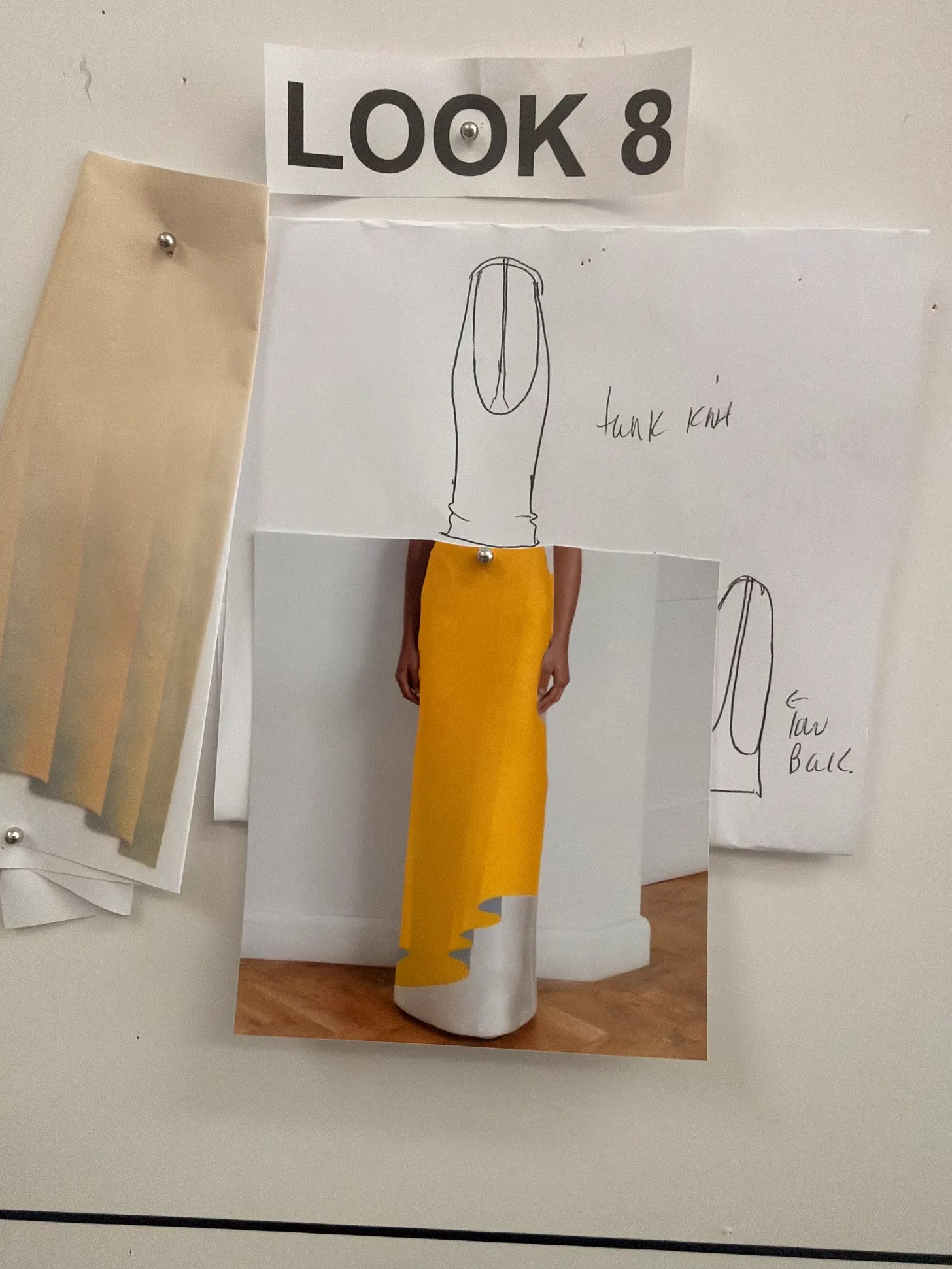
The entire SS27 collection came together in about 60 days and all in New York City—which is wild since we also made a film to go with it. It all started with the skirt (which we will get to later in another post), but the main theme that I kept coming back to was this short case study on the nature of folds in relation to fabrics. Not only a ruffle, but the shadow play you get within large draped fabrics.
I also have a large obsession with Petra Blaisse (shout-out to her partner, Prada’s Rem Koolhaas). Petra is a curtain artist and landscape designer. She is major. We should circle back to her another time, but here are some of my favorites:
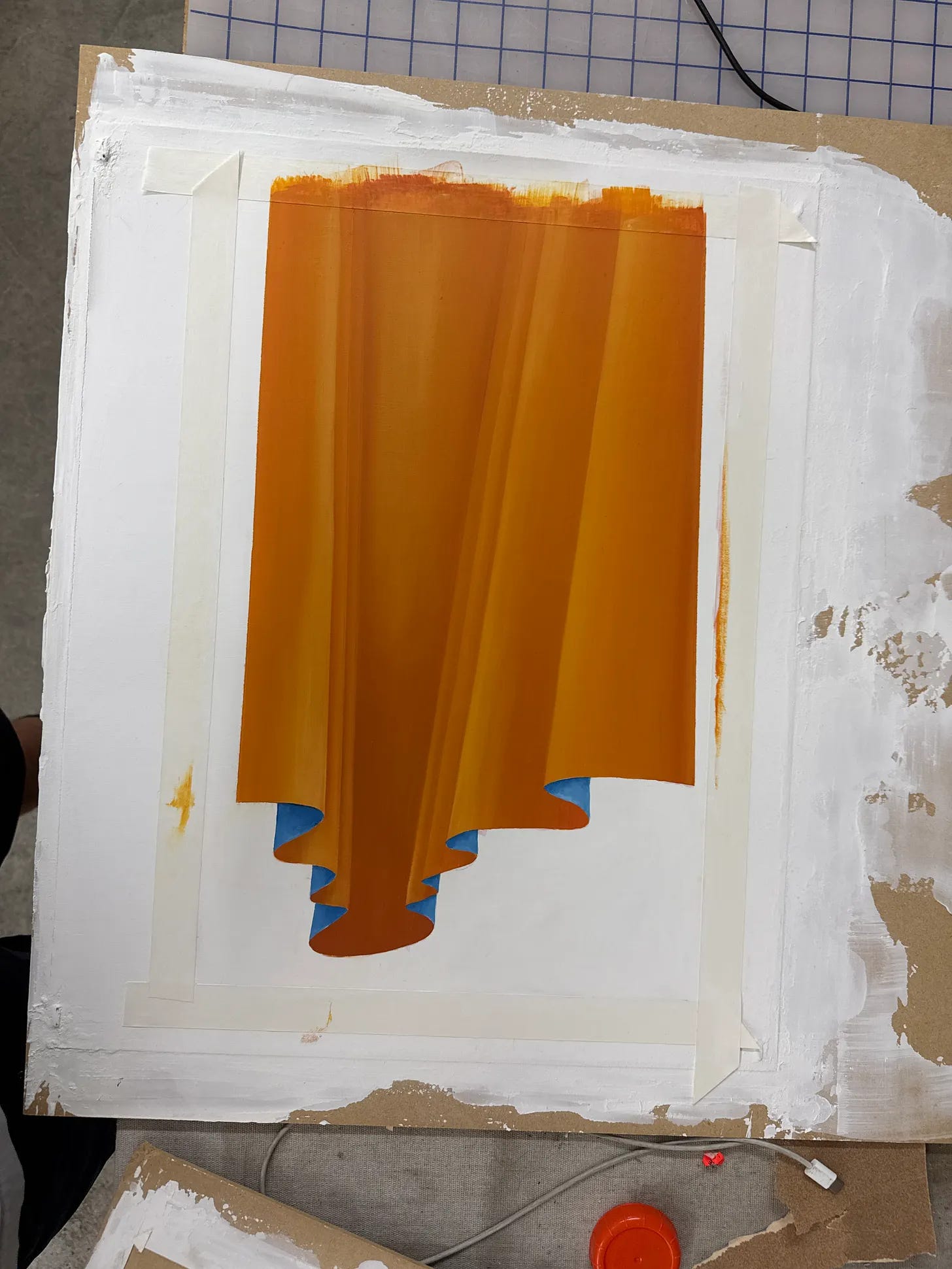
We were also incredibly inspired by Swedish painter Torbjörn Vejvi, whose flattened surfaces test the boundaries of dimension. The drape-front skirt and dress, in particular, borrow their logic from these ideas. I folded one of Torbjörn’s paintings as I saw it as a skirt!
Now my brain goes: “I love this, how do we do this?” I immediately think of my dear friend Kira’s boyfriend, Ian Stanton, who is a very talented realist painter.
It was crazy to watch my idea come to life so exactly. Oil painted on canvas.
Now on our end, we were making a muslin for the skirt and the column dress, and had the white silk prepped for printing. Ian is based in LA, so we had to get the oil paintings scanned. But because they were oil paintings, you have to wait days for them to dry, so it was very down to the wire.
This is not one of those periodic “End of Reading” Atlantic clickbait essays. Americans—well, the kind who read books or newsletters about books—are well-versed in the challenges with literacy and education that have stretched on for decades. Rather, today we’re tackling the multi-year, fairly rapid—at least relative to book industry speed—radical change that book publishing has experienced over the past decade.
First, the entire industry boomed in Covid—writing is a hobby and reading for pleasure is, too—and has trudged along as it usually does, staying flat, growing a little over the years since 2020. But for the past decade the market for nonfiction has slowly collapsed. What has happened in the last ten years is that the overall industry has grown modestly, but fiction and nonfiction have basically flipped positions. In 2015, 6 of the top 25 bestselling hardcover books—this is a not-perfect but useful proxy for new books published—were fiction. In 2025, 18 of the top 25 hardcover books were fiction, meaning only 7 were nonfiction, almost an exact inversion of ten years ago.
The nonfiction collapse has profound implications for the industry. Nonfiction, historically, has always been seen as the more stable part of the business for logical reasons. The demand for nonfiction has always felt more predictable than fiction. Novels are complete imaginations often written by relatively obscure strangers. Nonfiction has experts and clear topics of interest. Want to lose weight? Grab a diet book. Want to learn about World War II? You got options. Presidential memoir? Maybe not these days, but sure. And nonfiction books are written mostly by famous people or experts or popular quacks—also known as people with a built-in “platform.”
Nonfiction being more predictable and stable means that nonfiction book advances have typically had a higher floor than those of fiction and, somewhat counterintuitively, are sold on less material. Celebrities have probably gotten millions for a cocktail-napkin-worth of material (if that). Other nonfiction proposals can range anywhere from 30 to 120 pages but usually end up in the middle of this range. You’re paying the author for their public stature, not necessarily their literary prowess. These books are treated more like a commission. The term “book advance”, although it refers to all books, likely comes out of nonfiction because authors are advanced a stack of money to entice them to set aside some of their time—instead of engaging in speaking, television, teaching, politics—to write a book. Whereas most novelists are advanced money to revise a full manuscript they’ve already written.
The paradigm of nonfiction being the more stable category is no longer the case. Part of this is platform unpredictability—it is less and less certain which platforms will translate directly to book sales. Media also isn’t as concentrated; you can’t depend on coverage on a few national news programs to push out copies, but rather a parasocial connection—even with a relatively smaller reach—between author and reader is likely to translate to stronger sales. Bunnie Xo has a large social media following, for instance (2 million on Instagram) but isn’t an established household name such that you’d think her book would be the third-best-selling nonfiction hardcover this year.
However, the nonfiction decline is far less about the changing nature of “platform” and the fractured media landscape, and more about a precipitous falloff in demand.
Netflix UK is now on Substack. Its first post is penned by Emma Corrin, who plays Elizabeth Bennet in the forthcoming Pride and Prejudice adaptation.
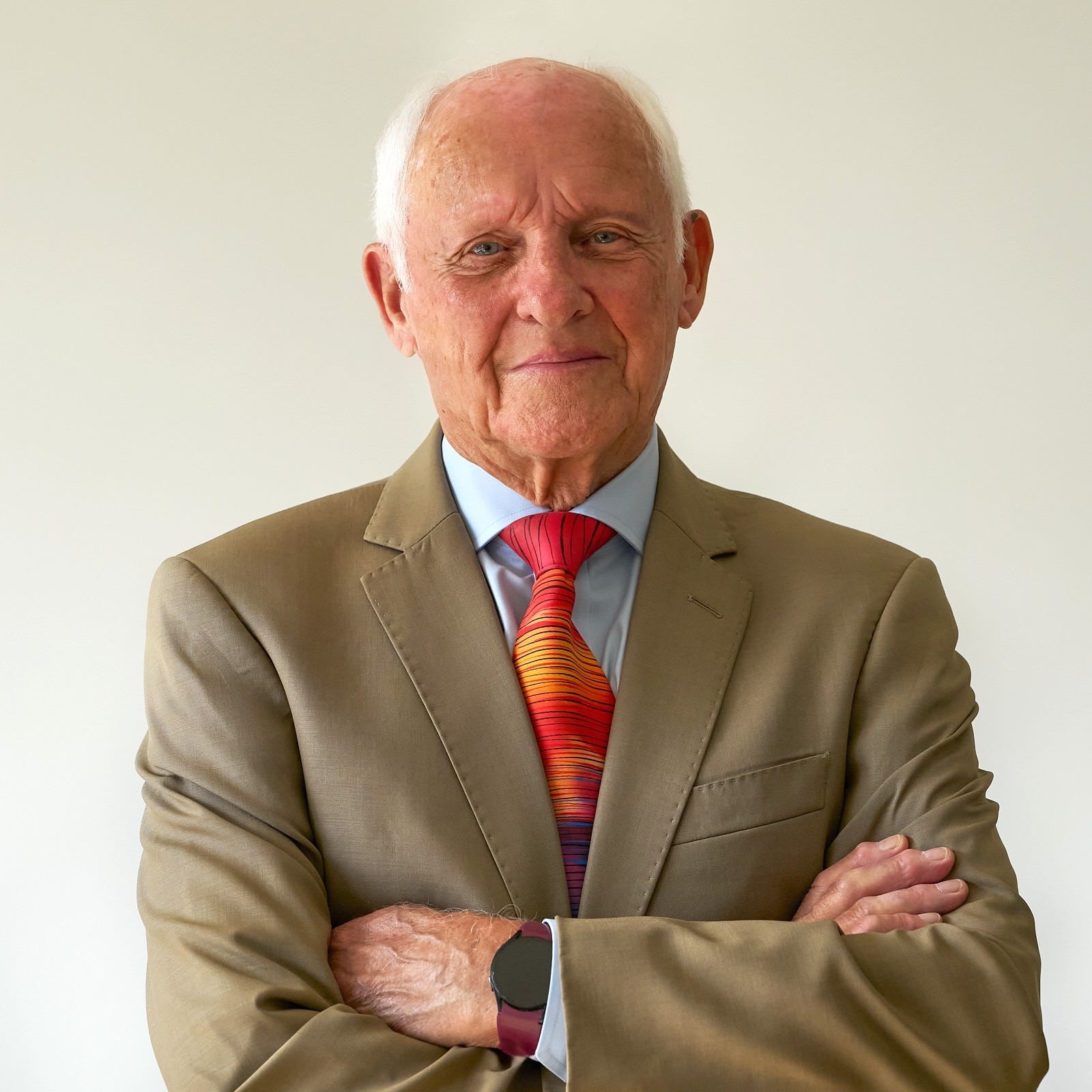
Dickie Arbiter, a former Buckingham Palace spokesman to the late Queen Elizabeth II and a royal commentator, has launched on Substack.
Scott Evans’s podcast, House Guest, now has a companion Substack where he’ll be sharing bonus content.
Stacey Solomon has brought her newsletter to Substack. She’ll be sharing advice and “covering everything from health and wellbeing to money, travel, gardening, beauty & fashion.”
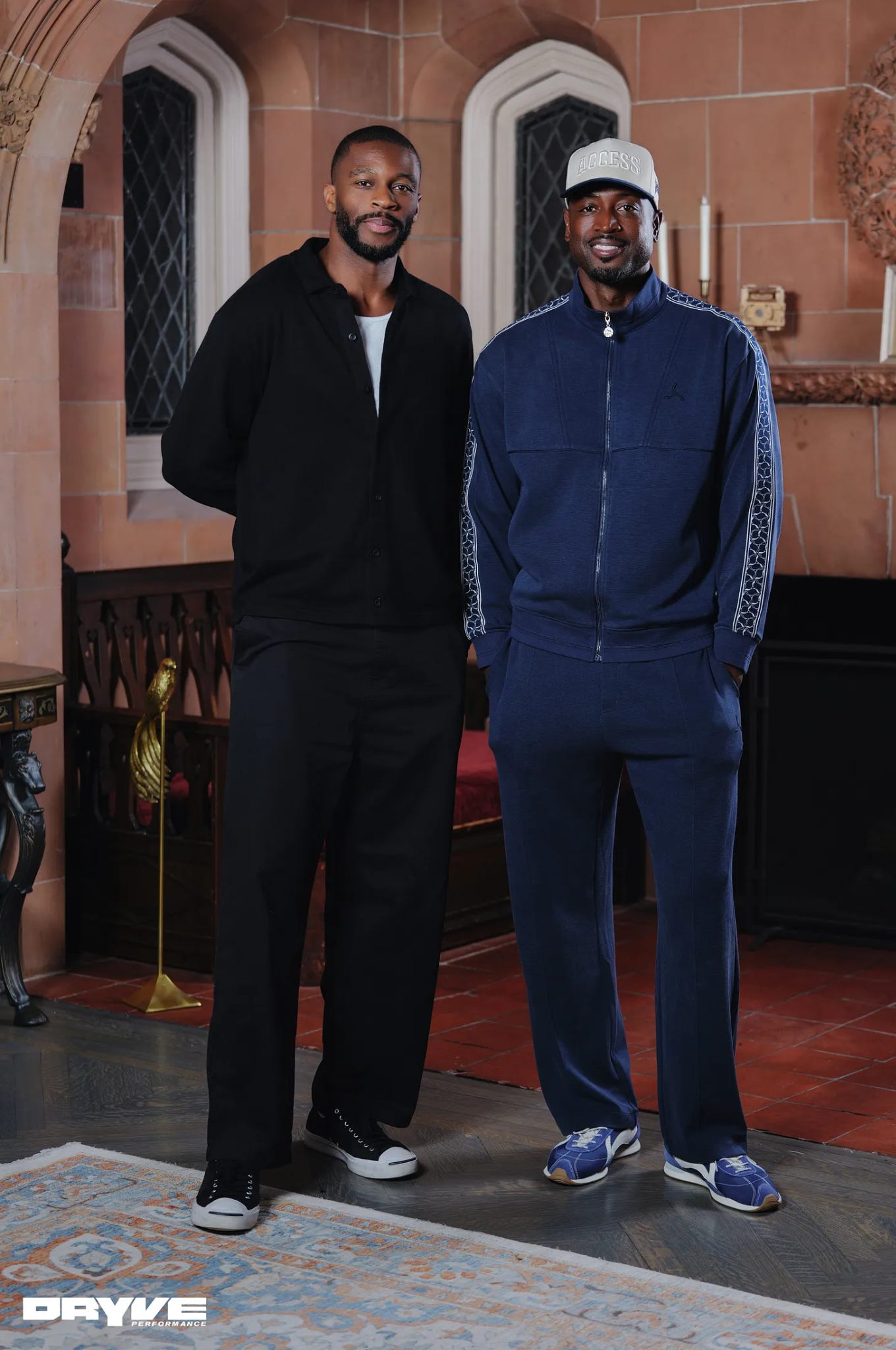
Basketball Hall of Famer and three-time NBA champion Dwyane Wade has joined Substack, along with his longtime business partner and fellow former college basketball star Chad Easterling, to launch Dryve Performance, where they will weigh in on life and basketball and host live chats with their subscribers.
Andrew Pierce, the Daily Mail’s long-standing political commentator and broadcaster, is now on Substack.
Inspired by the writers and creators featured in the Weekender? Starting your own Substack is just a few clicks away:
The Weekender is a weekly roundup of writing, ideas, art, audio, and video from the world of Substack. Posts are recommended by staff and readers, and curated and edited by Danya Issawiout of Substack’s New York office.