The Talent Gold Mine: How Exceptional People Are Made
The hidden infrastructure behind world-class performance

Hey everybody, Guillermo here.
Today we’re lucky to have Jack Cantillon, Partner at Green Room, break down how the world’s best environments consistently produce extraordinary talent.
From Kenyan marathon runners to Jamaican sprinters, certain places seem to generate a disproportionate share of world-class performers.
It’s not luck. It’s not genetics.
It’s something deeper: what researchers call “talent gold mines.”
In this article, you’ll learn:
• Why the best talent often looks completely ordinary at first
• How great organisations identify “whispering talent” before anyone else
• Why context matters more than raw performance when evaluating people
• The environments that consistently turn potential into world-class results
• And how companies can build their own systems to develop exceptional talent
Now, over to Jack.
By Jack Cantillon, co-founder and Partner at Green Room. I’m a Dublin based first cheque investor. We back Europe’s most exceptional individuals before they become founders.

Long-distance runners from Kenya dominate global marathons.
Jamaican sprinters repeatedly top the 100 metre podium.
Cuban fighters dominating Olympic boxing.
The striking thing is concentration. A handful of regions repeatedly produce a disproportionate share of the world’s champions, often without the resources or facilities normally associated with elite performance.
High-performance anthropologist Rasmus Ankersen spent years living and training inside these environments to understand why. His conclusion, outlined in his book The Gold Mine Effect, was simple: these places are talent gold mines.
Talent gold mines are the hidden infrastructure behind world-class performance; in sport, in business, or any field where there is competition for status or resources. Ankerson concludes that these are not genetically fuelled, but environments with specific, reproducible conditions that consistently turn ordinary people into extraordinary performers.
So what are the common conditions that he observed?
1. A System or Champion to Find Overlooked Talent
Talent exists everywhere.
Some of it is immediately obvious. Usain Bolt is a classic example. His speed was undeniable from a young age. Talent like this announces itself.
Because these individuals are so visible, they attract attention and demand quickly. Organisations compete for the same small group of clearly exceptional performers. The result is predictable.
To gain an edge, you have to rethink how and where you look.
One way is to focus on talent that is currently overlooked because it is still underdeveloped. The opportunity lies in identifying the potential in something that still appears ordinary.
Which raises the harder question: how do you spot potential in someone who doesn’t yet look exceptional?
The answer to this lies in the story behind the performance; the trajectory, the constraints someone has worked within, the rate at which they improve, and the environments they have navigated.
Some talent shouts. But a surprising amount of it whispers. When looking past the obvious and spotting whispering talent, there are three key principles to keep in mind:
A. Don’t over-index on innate talent
Physical or innate advantages can provide a head start, but they rarely determine world-class outcomes. Being 2 metres tall may help in neighborhood basketball, but it doesn’t guarantee NBA success.
Innate traits are only a preliminary filter; they offer a small edge, not a roadmap to the top.
B. Evaluate performance in context
Current performance can signal potential, but it is an unreliable measure on its own. A result means very different things depending on the circumstances behind it. Ask:
What resources did they have?
What environment were they operating in?
What obstacles did they overcome?
Two identical outcomes can represent vastly different trajectories.
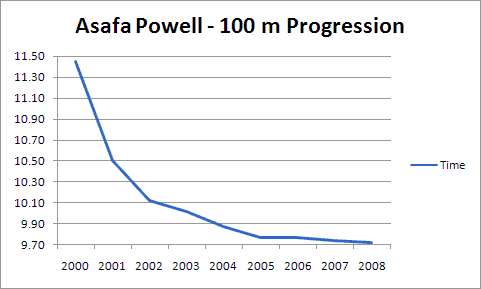
Ankersen illustrates this with Jamaican sprinter Asafa Powell. At Jamaica’s High School Boys and Girls Championships, Powell finished seventh in the 100 metres with a time of 11.45 seconds; unremarkable on paper. But legendary coach Stephen Francis looked deeper. Powell had no elite coaching, no structured training, and minimal support infrastructure. Yet he was competitive with the country’s best young sprinters.
Francis didn’t see a mediocre result; he saw a gap between current performance and future potential. That gap represented opportunity. Powell went on to break the 100-metre world record, running 9.72 seconds and becoming the fastest man alive at the time. The talent had always been there. It simply required someone willing to look past the number beside his name to unlock its potential.
The story behind the result matters more than the result itself. Sometimes the most interesting signal is achievement without advantages - a first-generation student winning a scholarship against peers with legacy connections, an individual with no technology background building a complex app entirely through self-study at night, or a small team shipping a product that competitors with huge budgets couldn’t.
C. Hire for attitude, not just aptitude
There is an old hiring rule: hire for skills, fire for attitude.
The best organisations invert this. Skills can be taught. Drive, curiosity, coachability, and resilience are far harder to install.
The right mindset drives growth and long-term future performance.
2. Inner Conditions for High Performance are Present
Finding overlooked talent is only half the work. Strong ability and potential placed into the wrong environment rarely develops. Talent gold mines work because they create internal conditions that allow potential to compound.
Three conditions appear repeatedly.
A. Belief comes before knowledge
The first ceiling on performance is psychological. If someone cannot imagine achieving something, they almost certainly won’t. Great coaches expand belief before they expand skill.
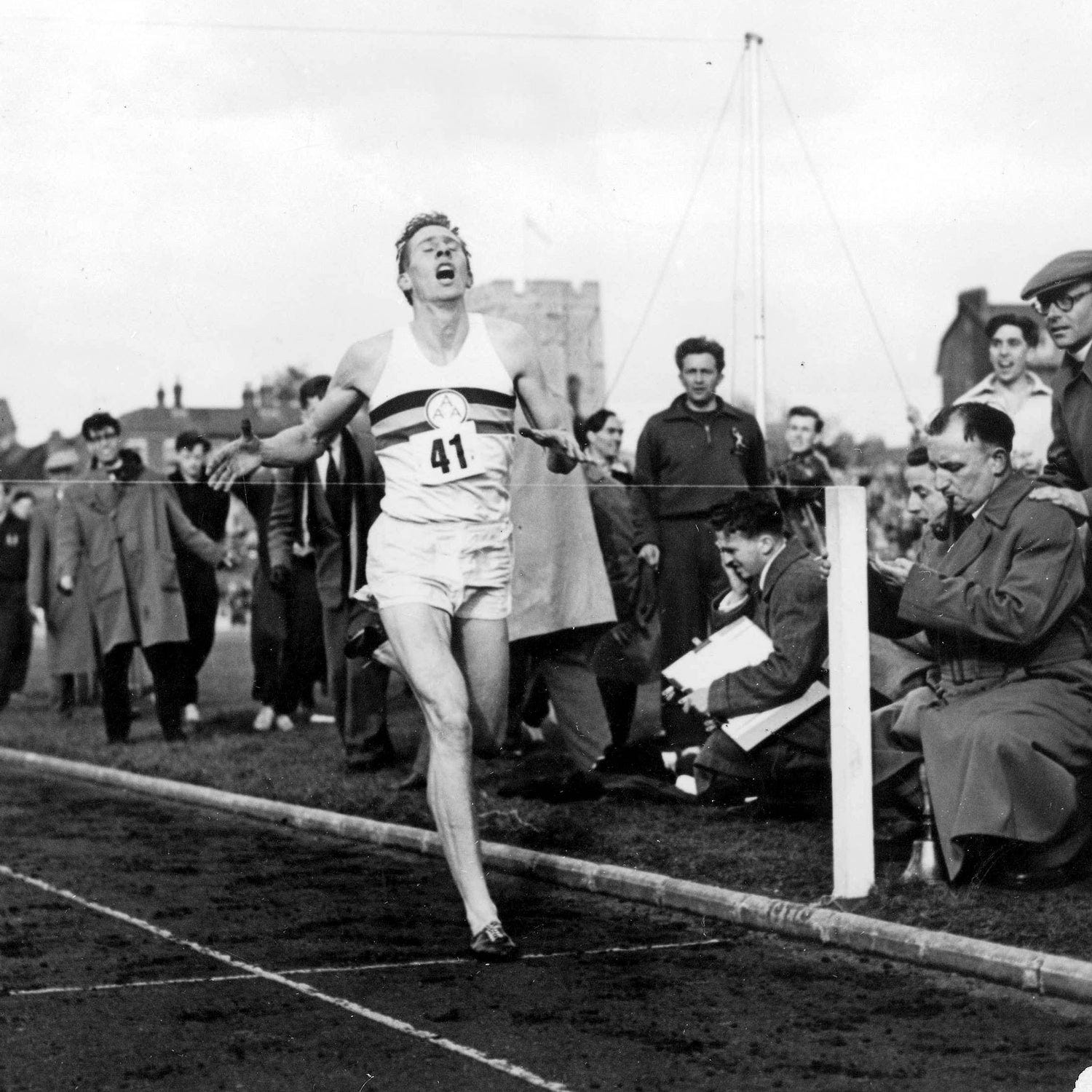
For decades the four-minute mile was considered physically impossible. Then in 1954, Roger Bannister broke the barrier. Within a year, sixteen other runners had done the same.
The physiological limit had not changed. The psychological one had. Belief, which may often appear irrational, widens the set of actions people are willing to attempt.
B. Positive discomfort drives improvement
Comfort is the enemy of high performance. Tension drives growth.
The best development environments create a constant state of positive discomfort - stretching individuals just beyond their current capabilities.
Sustained high performance is driven by willingness to challenge oneself - consistently stepping beyond the comfort zone. When Michael Jordan was cut from his high-school basketball team, he responded by arriving before dawn each morning to train.
Great performers do not avoid difficulty. They organise their lives around it.
C. Adapt the system to the individual
Over-systematising talent development produces predictable results: average performers at scale.
Great coaches work differently.They start with principles, not rigid playbooks, and adapt to the individual in front of them.
As Ankersen describes it, the best coaches and leaders are angels and devils at the same time - supportive when needed, demanding when required. The art lies in knowing which role the moment calls for.
3. Motivated Persistence: Intrinsic & Extrinsic Motivators
Passion and interest are necessary, but not sufficient. Even the best environments fail without one final ingredient: motivated persistence - arguably the single most important predictor of world-class performance. Psychologist Angela Duckworth calls it grit: sustained passion and perseverance over long periods - years of consistent work, built through habits, routines, and a committed lifestyle.
One of the most remarkable examples comes from Kenyan running. In 1976, Irish missionary and teacher Brother Colm O’Connell arrived in Iten, Kenya with no formal coaching background. Over the following decades, he produced 25 world champions and 44 Olympic gold medallists - all from a single high school. The environment helped. Training at 2,400 metres altitude naturally improves aerobic capacity. But altitude alone does not produce champions.
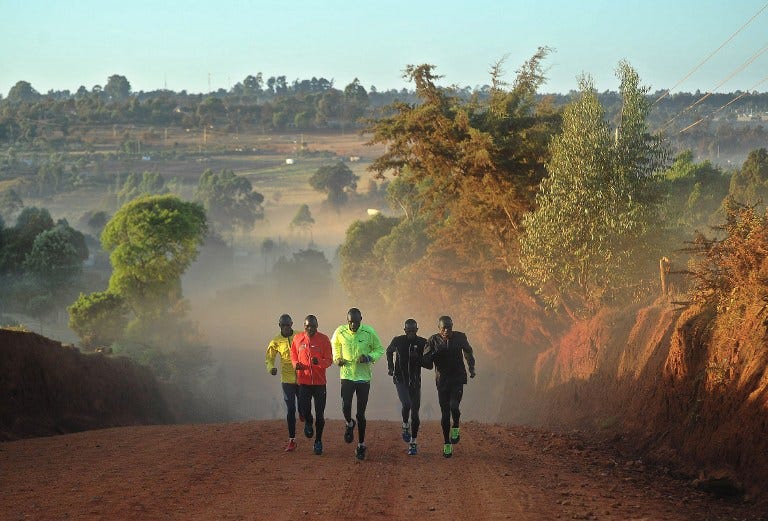
What truly fuels world-class performance is the presence of both intrinsic and extrinsic motivation: a missionary drive to master one’s craft, and a mercenary desire to seize the tangible rewards that come with winning, especially when the economic stakes are life-changing to one’s current life circumstances (footballers from the favelas have more at stake than most). Success is further amplified by role models - seeing what’s possible pushes individuals to match and surpass it, and the structured environment that channels effort and resilience.
Struggle becomes part of the development process, and over time persistence itself becomes a defining strength.
4. Building Your Own Talent Gold Mine
Jamaica and Kenya are natural talent gold mines, driven by national passion and local opportunity.
The bigger opportunity lies elsewhere - individuals whose potential whispers rather than shouts, whose current performance may look ordinary but whose trajectory signals much more.
Finding talent that is currently non-obvious or underdeveloped is where organisations can gain a real edge.
Red Bull’s approach across Formula One and football illustrates this perfectly.
In F1, the Red Bull Junior Programme scouts raw teenage karting talent, surrounds them with coaching, simulators, media training, and engineering support, and provides a clear path to the top - every junior knows Vettel and Verstappen came through the system, a deliberate proximity effect.
In football, Sadio Mané arrived at Red Bull Salzburg as an unheralded teenager from Senegal. With no elite pedigree or obvious path to the top, Salzburg signed him not for what he had already achieved, but for the potential their environment could unlock. Four years later, he was at Liverpool, eventually winning the Champions League and African Player of the Year.
To replicate this approach, the lessons from talent gold mines are clear:
Look beyond the obvious. Don’t focus solely on the standout performers. Seek whispering talent with potential to flourish.
Evaluate performance in context. Understand the constraints and opportunities behind results. Two identical outcomes can indicate vastly different ceilings.
Prioritise attitude and mindset. Curiosity, resilience, coachability, and internal drive matter more than current skill level. Skills can be taught; the right mindset drives development.
Create the conditions for growth. Expand belief, embrace productive discomfort, adapt systems to the individual, and nurture motivation and grit.
Be patient and persistent. Exceptional talent develops over time. Provide consistent opportunities, challenge, and support, and let growth compound.
Talent gold mines are not accidents of geography or genetics. They are systems built around a simple insight: exceptional performance emerges when overlooked potential meets the right environment.
The organisations and teams that consistently produce extraordinary individuals don’t just compete for the obvious stars; they design environments that discover, develop, and compound hidden potential over time. Do that well, and talent stops being something you hope to find. It becomes something you reliably create.
Next week, we’ll explore how these principles can be applied to building future startups and driving high performance in technology.